In our seminar rooms or comfortably from home!
We support you as a consultant, organizer, and implementation partner for IT-qualifications, IT-projects, and Data Centre training
News: EPI joins the TÜV NORD GROUP
This marks a significant milestone in EPI’s 38-year journey, strengthening its position to serve customers while continuing to operate independently under the EPI brand
Our bestseller workshops

 PDF
PDF


Seminartermine nach Kategorien
You can rent our seminar rooms!
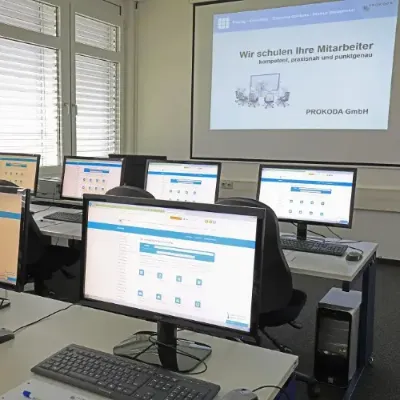
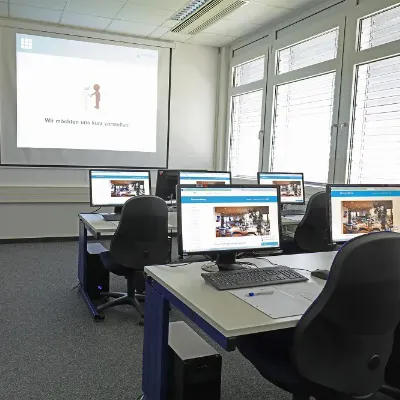
Your booking with us is transparent and flexible, without hidden costs. Our seminar rooms in Cologne not only offer pleasant air conditioning, but are also equipped with high-quality technology such as PCs, flat screens and projectors.

More Efficiency in Excel: Automate, Structure, Create Reports
In this hands-on Excel workshop, you will learn how to efficiently process, automate, and analyze lists and data. Using macros, conditions, and smart automation techniques, you will streamline your daily work and save valuable time.
You will discover how to perform automated checks, structured copying, and data consolidation, and how to present your results in meaningful reports. After this seminar, you will be able to manage large or complex Excel lists reliably and professionally.
Your Benefits at a Glance
- Learn macros and automation without needing to be a programming expert
- Optimize large datasets and create automated reports
- Save time and reduce errors with smart Excel techniques
- Hybrid workshop: participate on-site or live online
Seminar Content
Solutions with Programming / Macros
- Create your own macros and use them effectively
- Start macros directly from the worksheet
- Use variables and make automated decisions
- Understand and apply events purposefully
Automated List Processing
- Automated checks and structured list organization
- Copy rows containing specific values
- Consolidate data for reporting
- Remove empty rows and distribute large lists across multiple sheets
Creating Reports
- Save results as value copies
- Practical applications for reports and management summaries
Target Group
This seminar is designed for anyone who regularly prepares numbers and lists, especially:
- Business decision-makers
- Controllers
- Accounting staff
- Excel users who want to apply automation and macros in a practical way
Requirements
- Solid basic knowledge of Microsoft Excel
- Experience with tables, formulas, and basic functions is helpful
Exercises for more peace, focus, and joy
Modern working life is characterized by fast pace, information overload, and constant availability. This seminar introduces proven strategies to reduce stress and bring more calm, focus, and joy into your daily professional routine.
The focus lies on practical exercises combined with the purposeful use of digital tools such as SharePoint, OneNote, Outlook, Teams, Planner, and Microsoft To Do. The goal is not only to understand calmness and mindfulness on a theoretical level, but to integrate them concretely and sustainably into your everyday work.
Our experienced trainers will show you:
- how to recognize and reduce stress more consciously
- how to build inner calmness and mental resilience
- how to use digital tools effectively to lighten your workload
- how to strengthen mindfulness, focus, and self-organization
- how to establish calmer work routines and healthier habits
Seminar Goals
This seminar helps participants to:
- perceive and reduce stress more consciously
- strengthen inner calmness and mental resilience
- use digital tools meaningfully to reduce overload
- improve mindfulness, focus, and self-organization
Your Benefits at a Glance
- Practical seminar with concrete exercises
- Combination of stress management and digital tools
- Strengthening mindfulness, focus, and mental resilience
- Direct transfer to the daily work routine
- Sustainable development through reflection and documentation
Seminar Content
Anti‑Stress Package 4.0
SharePoint
- Creating a SharePoint site as a central hub for stress‑reduction resources
- Integrating interactive elements such as stress‑level surveys and feedback boxes
Resources of the Past
OneNote
- Building a OneNote notebook for capturing experiences and coping strategies
- Using the notebook as a learning resource for new employees
How We Learn Calmness
Microsoft Teams
- Setting up regular team dailies with short mindfulness impulses
Planner
- Structuring and prioritizing tasks
- Reducing overload through organized planning
Mind‑Magic: Focus, Mindfulness & Joy
Outlook
- Integrating prepared mindfulness and focus exercises into the calendar
Microsoft To Do
- Daily check-ins for mindfulness practices and habits
Mental Strength: Backbone & Confidence
Microsoft Forms
- Creating a form for confidence training and self-reflection
Microsoft Stream
- Providing training videos to strengthen mental competence
Evaluation Criteria
- User-friendliness: How easily can employees access and use the resources?
- Engagement: How actively are the tools and materials used?
- Feedback: Perceived effectiveness in stress reduction and resilience building
Documentation
- Creating project documentation with support from ChatGPT and Copilot in Word
- Analyzing feedback and usage data in Excel for continuous improvement
Your Benefits
By participating in this seminar, you will gain valuable experience using ChatGPT and Copilot.
You will learn how to use these tools for text creation, documentation, and analysis — and how to adapt them to your personal needs. You will also reflect on your own development and discover your strengths and potential for long‑term improvement in calmness and resilience.
Methodology
The seminar is based on:
- proven strategies for stress reduction
- practical exercises supported by Microsoft 365 tools
- reflection, mindful practice, and real‑world implementation
The focus is on applying what you learn directly to your workday.
Analyze data, calculate probabilities, and identify trends using Excel in Microsoft 365
Use the full power of Microsoft Excel in Microsoft 365 to perform statistical analyses, probability calculations, and data‑driven decision‑making — efficiently and without additional statistics software.
In this practical seminar, you will learn how to apply stochastic and statistical methods directly in Excel.
Whether production data, sales performance, customer segments, or resource planning — many typical questions from statistics and probability can be solved easily with Excel:
- What level of production failure rate is acceptable?
- Which price segments generate the highest revenue?
- Are there relationships between product purchases or customer groups?
- How can resources be planned and allocated optimally?
You will learn how to analyze complex datasets using formulas, functions, PivotTables, and Power Query, recognize trends, and create meaningful visualizations.
This seminar combines theoretical foundations of statistics with hands‑on Excel applications — ideal for controlling, quality management, data analytics, and informed business decisions.
Our experienced trainers will show you:
- how to safely apply statistical and stochastic methods in Excel
- how to calculate probabilities, frequencies, and distributions
- how to interpret and visualize statistical indicators
- how to use Power Query and PivotTables for advanced analytical workflows
- how to derive trends and patterns from real‑world data
Your Benefits at a Glance
- Practical application of statistics and stochastics using Excel
- Modern methods with Microsoft 365 — no extra software required
- Efficient data analysis & visualization using formulas, Pivot & Power Query
- Clear explanations of complex statistical concepts
- Ideal for controlling, quality management & data‑driven decisions
- Hybrid workshop: attend on‑site or live online
Seminar Content
Introduction to Stochastics & Statistics
- What is stochastic analysis? Core concepts & use cases
- Understanding quantitative & qualitative data
- Mapping variables and attributes in Excel
- Considering samples vs. populations
Data Analysis & Visualization with Excel (Microsoft 365)
- Using conditional formatting to highlight numeric patterns
- Univariate & bivariate analysis
- Calculating probabilities and expected values
- Absolute & relative frequencies
- Statistical class formation, class width & frequency distributions
Statistical Indicators & Calculations in Excel
- Measures of central tendency and dispersion
(arithmetic, harmonic, geometric mean) - Empirical quantiles, quartiles, median, percentiles
- Variance, standard deviation & standard error
- Linear deviation & trend calculations
Data Analysis Tools & Add‑ins
- Working with the Excel Data Analysis Toolpak
- Frequency analysis, correlation, regression, covariance, ANOVA
- Goal Seek & Solver for scenario modeling
- Power Query for grouping & frequency analysis
Charts & Visualizations
- Creating histograms, column, line, and boxplot charts
- Interpreting distributions & trends
- Using PivotTables for statistical evaluations
Important Excel Functions for Statistics
SUM, COUNT, MAX, MIN, ROUND, HARMEAN, GEOMEAN,
AVERAGE, MEDIAN, MODE,
COUNTIF(S), SUMIF(S), AVERAGEIF(S),
SUMPRODUCT, FREQUENCY,
QUARTILE.INC / EXC, TREND,
STDEV.P / STDEV.S, RSQ, CORREL,
SLOPE, INTERCEPT, COVARIANCE,
RAND, RANDBETWEEN
Prerequisites
Participants should have good basic knowledge of Microsoft Excel (Microsoft 365), especially in formulas, functions, and charts.
Prior knowledge of statistics or stochastics is helpful but not required.
Target Audience
This seminar is ideal for professionals and managers who regularly work with data analyses and statistical evaluations in Excel, especially:
- Controllers and analysts
- Employees in quality management, sales, controlling, or production
- Professionals who use statistical methods for decision support
- Lecturers, students, and researchers interested in stochastics & statistics using Excel
Communicate and collaborate effectively in the digital workplace
Digital communication and collaboration have become essential elements of today’s working environment. They help us manage tasks, appointments, and project workflows — while also introducing new challenges in how we handle information, communication channels, and digital etiquette.
One of the greatest challenges is managing the constant flood of information. Email inboxes, in particular, can quickly become a major productivity blocker. In this seminar, you will learn how to improve your digital communication workflow and make conscious decisions about when email is appropriate — and when a call, conversation, or meeting is the better choice.
We also explore how to conduct meetings — onsite or virtual — in a constructive, efficient, and creative way.
Our experienced trainers will show you:
- how to choose and combine communication channels consciously and effectively
- how to reduce email overload and manage information flow
- how to write clearly, concisely, and appropriately for digital contexts
- how to prepare and run meetings productively
- how to design and moderate professional online meetings
Your Benefits
- Practical seminar on digital communication and collaboration
- More mindful handling of information overload and digital channels
- Concrete strategies to reduce email stress
- Methods for improving meeting quality — including online meetings
- Direct transfer into daily professional routines
Seminar Content
Foundations of Information Transfer
- Communication 4.0
- Communication channels in the digital workplace
- Synchronous vs. asynchronous communication
Mailing & Wording
- Digital etiquette and communication norms
- Writing clearly and understandably (“easy to read – easy to understand”)
- Selecting appropriate wording in digital communication
Handling Email Overload
- Causes of email excess and communication loops
- Identifying and breaking counterproductive email cycles
- Optimizing your personal email workflow
Communication & Perception
- Information, communication, and cybernetics
- The “inner map” — model of the world
- The iceberg model applied to written communication
Professional Conversations & Meetings
- Conducting constructive and creative professional discussions
- Structuring and preparing meetings effectively
- Running efficient, focused meetings
Digital Meetings
- Meeting, video conference, or teleconference — what to choose when?
- Special characteristics of digital meetings
- Checklist for successful online meetings
Target Audience
This seminar is designed for:
- anyone who communicates within or across digital teams
- employees who use email as a core communication tool
- professionals who want to communicate more consciously and efficiently in a digital environment
Automate, optimize, and develop your own solutions
Deepen your knowledge from Module 1 and learn how to automate complex tasks professionally with VBA.
In this intensive 2‑day workshop, you will develop your own functions, procedures, and user dialogs, analyze existing macros, and connect Excel to other systems — such as Outlook or SAP.
You will discover how to streamline workflows, process data from different sources, and integrate Excel with other Office applications.
With advanced VBA programming, you will build real business solutions that save time, reduce errors, and increase efficiency.
Our experienced trainers will show you:
- how to apply advanced VBA techniques confidently
- how to use procedures, functions, and control structures effectively
- how to build interfaces, dialog boxes, and parameter controls
- how to design robust automations for large datasets
- how to connect Excel with other Office and enterprise systems
Your Benefits at a Glance
- Practice‑oriented deepening of your Excel VBA and macro skills
- Create your own functions and procedures for complex business tasks
- Automate processes using Excel, Outlook, and other Office tools
- Build user‑friendly dialog boxes and control interfaces
- Numerous best practices and real‑world examples for immediate use
- Hybrid workshop: attend on-site or live online
Seminar Content
Advanced Macros and VBA
- Use procedures and functions purposefully
- Apply conditions and control structures in real scenarios
- Use dialogs and worksheets to control program parameters
- Work intensively with Excel objects to build flexible solutions
Extending Excel’s Command Capabilities
- Write your own VBA functions and use them in Excel
- Read from and create text files
- Integrate Office objects directly into Excel
Automating Lists, PivotTables, and Charts
- Automatically extend base data with formula columns
- Perform advanced filtering using VBA
- Work with list objects
- Create and customize PivotTables via VBA
- Generate and control charts automatically
Practical Tips & New Use Cases
- Control other Office applications using VBA
- Automate the creation and editing of large numbers of files
- Generate and send Outlook emails — with or without attachments
- Read the Outlook inbox programmatically
- Create PDF files with VBA
- Generate XML files
- Use recursive programming for targeted searches
Target Audience
- Users who want to deepen and expand their macro and VBA knowledge
- Advanced Excel users who want to build their own automation solutions
- Professionals who want to integrate Excel with other Office applications
Prerequisites
- Knowledge of macro recording and initial experience with the VBA editor is recommended
Data Centre training for many companies:
These customers already trust us
Maximize the security and efficiency of your data center with our certified Data Centre Training. Our practical training courses provide essential know-how on the design, operation and compliance of data centers. Through continuous training, you reduce downtime, minimize sources of error and meet international standards. Benefit from recognised certifications with the globally accredited training courses from PROKODA GmbH & EPI.