In our seminar rooms or comfortably from home!
We support you as a consultant, organizer, and implementation partner for IT-qualifications, IT-projects, and Data Centre training
News: EPI joins the TÜV NORD GROUP
This marks a significant milestone in EPI’s 38-year journey, strengthening its position to serve customers while continuing to operate independently under the EPI brand
Our bestseller workshops

 PDF
PDF


Seminartermine nach Kategorien
You can rent our seminar rooms!
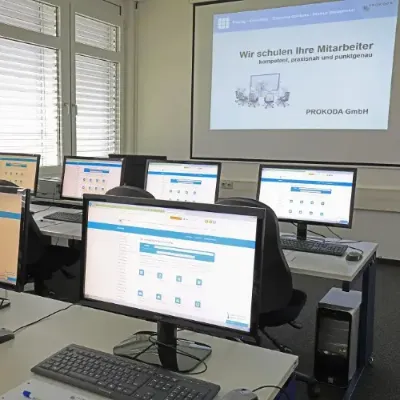
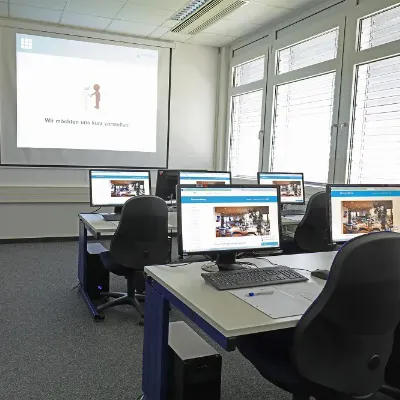
Your booking with us is transparent and flexible, without hidden costs. Our seminar rooms in Cologne not only offer pleasant air conditioning, but are also equipped with high-quality technology such as PCs, flat screens and projectors.

Successful communication in an agile environment
Agile projects place special demands on communication, as they rely on continuous collaboration, flexibility, and rapid information exchange. Technical knowledge alone is not enough — the quality of interpersonal communication is a decisive factor for project success.
This practical seminar strengthens your social and communication skills (soft skills) specifically for agile environments. Based on the values and principles of the Agile Manifesto, you will learn proven methods and models that sustainably improve collaboration within the team and with stakeholders.
Our experienced trainers will show you:
- how to apply communication skills effectively in agile projects
- how to integrate the principles of the Agile Manifesto into your communication
- how to use methods and models that enhance team interaction
- how to recognize and resolve conflicts early and constructively
- how to choose effective communication channels for stakeholder collaboration
Your Benefits at a Glance
- Practice-oriented seminar with direct relevance to daily agile project work
- Focus on communication, collaboration, and stakeholder management
- Recognized communication models clearly explained
- High level of practical exercises for direct application
- Sustainable competency development for agile roles
Training Objective
After the seminar, you will be able to:
- use communication skills purposefully in agile project environments
- apply Agile Manifesto principles to your communication
- use models that promote interaction in agile teams
- identify and resolve conflicts at an early stage
- use effective communication channels with stakeholders
Seminar Content
Fundamental Communication Models
- Paul Watzlawick’s Five Axioms
- The 4‑MAT Model
- The Four Sides of a Message (Schulz von Thun)
The SCARF Model & Change in Agile Environments
- Recognizing the seven phases of change
- Understanding the five elements of the SCARF model
- Minimizing threats and maximizing rewards during change processes
Project Environment Analysis
- Understanding the project environment in an agile context
- Identifying stakeholders and analyzing their interests and influence
- Recognizing risks from the project environment and developing mitigation strategies
- Developing communication and collaboration strategies with stakeholders
The Team Process in Agile Projects
- Applying constructive feedback rules
- Creating psychological safety for creative and fearless collaboration
- Using measures to shorten the storming phase
- Working effectively with the E.R.F.O.L.G. model
Business Model Canvas in Agile Projects
- Drawing analogies between start-up environments and agile teams
- Using marketing measures to increase visibility and transparency
- Creating a Business Model Canvas for your own project
- Using the canvas for internal and external communication
Communication in Agile Events
- Making decisions during Planning using Liberating Structures
- Developing creative ideas in Retrospectives
- Creating guidelines for Planning and Retrospectives using the Solution Pyramid
- Applying conflict avoidance strategies during Reviews
Daily Stand‑Up with Presentation Skills
- Speaking confidently at the board
- Using voice, posture, and facial expression effectively
- Presenting tasks structured by “Why – How – What”
- Writing clear and precise board cards (verb + subject)
Target Audience
This seminar is designed for:
- Testers and test managers
- Developers
- Product Owners
- Business stakeholders in agile projects
Prerequisites
- No special prior knowledge required
- Basic understanding of software development and agile methods is helpful
Practical Workshop for Data‑Driven Visualization in Excel (Microsoft 365)
Learn how to create, edit, and present charts in the latest Microsoft 365 versions of Excel. This workshop teaches the fundamentals and advanced techniques of modern data visualization in Excel — from column and bar charts to tornado charts, bubble charts, and dual‑axis charts.
You will learn how to build charts professionally, format them effectively, and save them as reusable templates. Additionally, the workshop includes practical use cases such as cost control, project monitoring, and data‑driven decision‑making.
Our experienced trainers will show you:
- how to create, edit, and design professional Excel charts
- how to choose the right chart type for your data and purpose
- how reusable templates save time and ensure visual consistency
- how to apply charts for project tracking, cost control, and reporting
- how to use modern chart types such as tornado, bubble, and dual‑axis charts
Your Benefits at a Glance
- Practical exercises with real‑world sample data
- Clear visual results for better decision‑making
- Time‑saving workflows using reusable chart templates
- Practical applications for cost control and project monitoring
- Hybrid workshop: join on‑site or live online
Seminar Content
Chart Basics & Overview
- Overview of common chart types
- Creating, modifying, and formatting charts
- Understanding chart elements and how to adjust them
- Saving charts as reusable templates
Column & Bar Charts
- Using background images in charts
- Displaying negative values correctly
- Cost control through effective chart layouts
- Creating Gantt‑style charts for project tracking
- Bar charts with images
Tornado Chart
- Creating tornado charts for comparing data sets (e.g. demographics or distribution data)
Line & Area Charts
- Using AutoShapes to enhance charts
- Visualizing competitor comparisons
- Arrow‑based highlights and callouts
- Working with dual axes for combined metrics
Bubble Chart
- Creating bubble charts for “traffic light” or status visualizations
Data Preparation & Analysis
- Filtering, restructuring, and refining data efficiently
- Creating subtotals
- Copying and transforming data ranges
- Practical example: presenting company position with competitor comparison charts
Target Audience
This workshop is ideal for:
- Users who want to analyze and visualize Excel data professionally
- Team leaders and project managers
- IT and Office users who want to utilize modern Excel chart types
- Anyone who wants to improve presentations using data‑based graphics
Prerequisites
- Solid basic knowledge of Microsoft Excel
- Basic understanding of charts and data visualization is helpful
Efficient Data Analysis with Microsoft Power Tools & Excel 365
Every successful analysis begins with well‑structured data. In this hands-on seminar, you will learn how to transform raw data into meaningful insights.
This data analytics seminar guides you through the entire analysis process – from data acquisition to interactive dashboards – using Microsoft’s Power Business Intelligence Tools.
Since around 80% of analysis effort goes into data cleaning and preparation, we show you how to optimize, automate, and professionalize these steps using Power Query, Power Pivot, and Power BI Desktop.
Our experienced trainers will show you:
- how to efficiently import, transform, and model data
- how Power Query, Power Pivot, and Power BI work together effectively
- how to analyze and visualize data professionally
- how to automate recurring analysis tasks
- how to build modern dashboards that support decision-making
Your Benefits at a Glance
- Comprehensive training: From raw data to interactive visualizations
- Practical use of Power BI Tools (Power Query, Power Pivot, Power BI Desktop)
- Learning based on realistic data scenarios
- Ideal for data analysts, controllers, and decision-makers
- Hybrid training: join on-site or live online
Seminar Content
Introduction & Overview
- Introduction to the Microsoft Power Business Intelligence Tools
- Differences and interaction between Power Query, Power Pivot & Power BI Desktop
- Installing and setting up the required add-ins
Power Query – Data Import & Transformation
- Importing external data (Excel, CSV, Web, SQL, folder structures)
- Combining multiple data sources
- Creating relationships between tables
- Data modeling: filtering, sorting, grouping
- Unpivoting data
- Performing calculations and transformations
Data Analysis with PivotTables
- Analyzing and visualizing data using PivotTables
- Using report layouts and formatting templates
- Applying grouping, slicers, and timelines
- Performing advanced PivotTable analyses
- Using PivotCharts for graphical insights
Power Pivot – Modeling & DAX
- Introduction to the Power Pivot interface
- Understanding and applying DAX expressions
- Creating and linking Power Pivot tables
- Using CUBE functions for deeper analysis
- Utilizing advanced analysis features in Excel 365
Visualization & Reporting
- 3D visualization of geographic data with Power Map
- Creating geo-reports and location-based analyses
- Selecting appropriate chart types for management reports
Power BI Desktop – Creating Modern Dashboards
- Introduction to Power BI Desktop
- Retrieving, transforming, and modeling data
- Building relationships between tables
- Designing interactive reports and visuals
- Exporting and publishing dashboards
Target Audience
This seminar is ideal for anyone who wants to systematically prepare, analyze, and visualize data – especially:
- Staff from controlling, marketing, sales, or IT
- Data analysts, professionals, and managers
- Advanced Excel users who want to work more professionally with Power BI and Power Tools
Prerequisites
- Basic knowledge of Microsoft Excel
- Experience with tables, formulas, and basic functions is helpful for effective use of Power Tools
More productive programming with AI support
Artificial intelligence is fundamentally changing how software is developed. Microsoft Copilot helps developers write code faster, detect errors earlier, and make development processes more efficient.
In this hands-on seminar, you will learn how to integrate Copilot effectively into your daily development workflow – from traditional programming to Excel programming, Power BI, and Power Automate.
Our experienced trainers will show you:
- how Copilot supports you in daily programming work
- how to use AI-powered code suggestions effectively
- how Copilot assists in analysis, automation, and BI scenarios
- how to adapt Copilot’s output to your own requirements
Your Benefits at a Glance
- Practical seminar tailored for developers and programmers
- Efficient use of AI throughout the development process
- Real-world examples from software, analytics, and automation projects
- More productive programming with less effort
- Direct value for software development, data analysis, and workflow automation
- Participation possible on-site or live online
Seminar Content
Fundamentals: Working with Microsoft Copilot
- Creating code suggestions
- Autocompletion in the development process
- Support for error detection and debugging
- Efficient use of Copilot in everyday development tasks
Advanced Copilot Features
- Context-sensitive code suggestions
- Support for code optimization
- Improving code readability and maintainability
Excel Programming with Copilot
- Creating UserForms
- Generating code for filtering and analyzing data
- Support for recurring Excel development tasks
Automating Data Analysis with Power BI
- Automatic generation of DAX expressions
- Support for queries and data models in Power BI
Creating Workflows with Power Automate
- Using Copilot to generate workflow scripts
- Automating recurring processes
Customizing Copilot Output
- Techniques for tailoring Copilot-generated code to specific requirements
- Evaluating and optimizing AI suggestions
- Tips and tricks for productive and safe usage
Target Audience
This seminar is intended for:
- Software developers
- Programmers
- Technically experienced professionals with a development background
Prerequisites
- Basic programming knowledge
- No AI-specific prior knowledge required
Become confident in working professionally with Copilot!
Artificial intelligence is evolving rapidly and offers enormous potential for everyday work. With Microsoft Copilot, users can create texts faster, analyze data more efficiently, prepare presentations automatically, and optimize emails in seconds.
In this compact, hands-on seminar, you will learn how to use Copilot purposefully and productively. You will gain a clear overview of its features, use cases, and limitations—and practice safe and effective AI usage in Microsoft 365 through numerous practical examples.
Our experienced trainers will show you:
- How to achieve better results with clear prompt techniques
- How Copilot really works in Word, Excel, PowerPoint, Outlook, and Teams
- Which use cases save the most time in everyday work
- How to use AI responsibly and securely
Your Benefits at a Glance
- Intensive, practice-oriented training for immediate application at work
- Well-structured exercises for all key Microsoft 365 apps
- Focus on real productivity gains through AI
- Suitable for beginners—no technical knowledge required
- Participation on-site or live online
- Rapid skill-building for productive work with Copilot
Seminar Content
Prompt Techniques
- Building effective prompts
- Defining roles, goals, and constraints
- Tips and tricks for better results
Copilot in Word
- Generating, expanding, and revising text
- Creating correspondence, reports, and meeting notes
- Automating formatting and content optimization
Copilot in Excel
- Analyzing data
- Generating and explaining formulas
- Identifying trends and creating charts
- Practical examples for data analysis
Copilot in PowerPoint
- Creating presentations from text or files
- Slide layouts, content enhancements, and visualizations
Copilot in Outlook
- Summarizing, drafting, and optimizing emails
- Suggesting automatic responses
- Planning appointments and tasks more efficiently
Copilot in Microsoft Teams
- Summarizing meetings (Recap)
- Deriving tasks from conversations
- AI support for quick research
Best Practices & Security Aspects
- Responsible use of AI
- Data protection and company policies
- What can and cannot be entered
- Handling errors and hallucinations
Target Audience
This workshop is ideal for anyone who regularly works with Microsoft 365 and wants to use Copilot productively in their daily tasks. Basic knowledge of Office applications is helpful but not required.
Prerequisites
- General Microsoft 365 user-level knowledge
- No technical or AI-specific prior knowledge required
Data Centre training for many companies:
These customers already trust us
Maximize the security and efficiency of your data center with our certified Data Centre Training. Our practical training courses provide essential know-how on the design, operation and compliance of data centers. Through continuous training, you reduce downtime, minimize sources of error and meet international standards. Benefit from recognised certifications with the globally accredited training courses from PROKODA GmbH & EPI.