In our seminar rooms or comfortably from home!
We support you as a consultant, organizer, and implementation partner for IT-qualifications, IT-projects, and Data Centre training
News: EPI joins the TÜV NORD GROUP
This marks a significant milestone in EPI’s 38-year journey, strengthening its position to serve customers while continuing to operate independently under the EPI brand
Our bestseller workshops

 PDF
PDF


Seminartermine nach Kategorien
You can rent our seminar rooms!
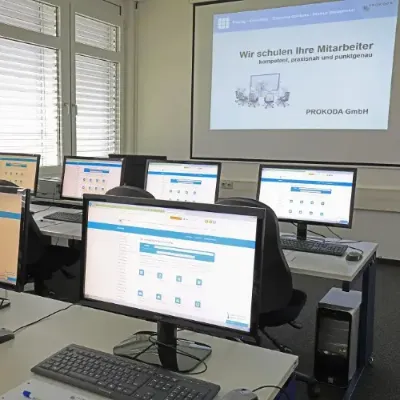
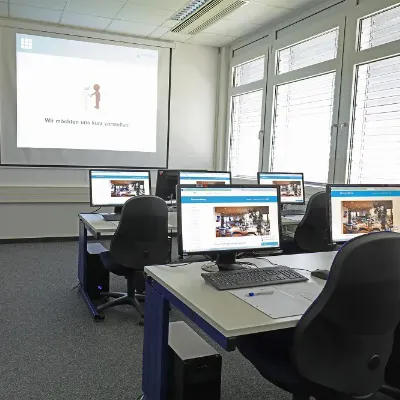
Your booking with us is transparent and flexible, without hidden costs. Our seminar rooms in Cologne not only offer pleasant air conditioning, but are also equipped with high-quality technology such as PCs, flat screens and projectors.

Learn Python in a Hands-On Way and Build Your First Machine Learning Models
In this practical seminar, participants learn the Python programming language from the basics to more advanced techniques and additionally acquire solid foundational knowledge in Machine Learning. By the end of the course, participants will be able to develop Python programs for data analysis, visualization, and initial Machine Learning models.
Your Benefits at a Glance
- Confident use of Python for data processing
- Analyze, prepare, and visualize data
- Understand fundamental Machine Learning concepts
- Apply and interpret classical ML algorithms
- Introduction to Matplotlib, Seaborn, NumPy, Pandas, and scikit-learn
- Practice-oriented exercises with your own datasets
- Step-by-step implementation from Python code to ML model
Seminar Content
Part 1: Python Fundamentals
- Introduction: Python overview, installation & setup (Anaconda, Jupyter), comparison with other languages
- Python basics: Variables, data types, conditions & loops, functions & modules
- Advanced Python techniques: Lists, dictionaries, sets, error handling, list comprehensions, introduction to classes & objects
Part 2: Mathematical Foundations for Machine Learning
- Math essentials: Linear algebra, statistics (mean, variance, correlation), probability
- Functions & visualization: Data analysis and visualization with Pandas, NumPy, Matplotlib & Seaborn
Part 3: Machine Learning Fundamentals
- Introduction to ML: Key concepts and typical application areas
- Classical ML algorithms: K-Nearest Neighbors (KNN), linear and polynomial regression, decision trees
- Model optimization: Understanding and avoiding errors, overfitting, and underfitting
- Working with scikit-learn: Creating pipelines, evaluating models, practical implementation
Prerequisites
- Basic understanding of mathematics (school level)
- No or only minimal Python knowledge required
- Personal laptop with a pre-installed Python environment (setup instructions provided)
Target Audience
- Technically oriented professionals (engineers, analysts, developers)
- Students in technical and scientific fields
- Career changers entering Data Science
- Anyone who wants to learn Python in a practical way and implement their first Machine Learning models
Understanding Machine Learning Models and Analyzing Data Professionally
In this hands-on seminar, participants learn the mathematical foundations and methods required for Machine Learning. Building on existing Python skills, the course covers essential ML algorithms, data analysis and visualization techniques, as well as model optimization. After completing the seminar, participants will be able to independently implement simple ML models and analyze data effectively.
Your Benefits at a Glance
- Build a solid mathematical foundation for Machine Learning
- Analyze and visualize data using Python, Pandas, NumPy, Matplotlib, and Seaborn
- Apply and evaluate classical ML algorithms
- Optimize models and avoid common pitfalls such as overfitting
- Practice-oriented exercises with your own datasets
- Step-by-step implementation of ML workflows in Python
Seminar Content
Part 1: Mathematical Foundations for Machine Learning
- Math essentials: Linear algebra, statistics (mean, variance, correlation), probability
- Functions & visualization: Data analysis and visualization with Pandas, NumPy, Matplotlib & Seaborn
Part 2: Machine Learning Fundamentals
- Introduction to ML: Key concepts and typical application areas
- Classical ML algorithms: K-Nearest Neighbors (KNN), linear and polynomial regression, decision trees
- Model optimization: Understanding and avoiding errors, overfitting, and underfitting
- Working with scikit-learn: Creating pipelines, evaluating models, practical implementation
Note
- This course is the second part of the 5‑day seminar “Introduction to Python and Machine Learning.”
- The preceding course “Introduction to Python” can be booked separately; the combined package is available at a reduced rate.
Prerequisites
- Basic understanding of mathematics (school level)
- Python skills equivalent to the “Introduction to Python” course
- Personal laptop with a pre-installed Python environment (setup instructions provided)
Target Audience
- Technically oriented professionals (engineers, analysts, developers)
- Students in technical or scientific fields
- Career changers entering Data Science
- Anyone who wants to understand and apply Machine Learning models and analyze data professionally
Using Python Confidently for Data Analysis and Automation
In this hands-on seminar, participants learn the fundamentals of the Python programming language and will be able to develop their own data-processing programs by the end of the course. The training covers both basic syntax and more advanced techniques such as classes, list manipulation, and error handling. Ideal for beginners and technically inclined professionals who want to use Python for analysis, automation, or their first data‑science projects.
Your Benefits at a Glance
- Confident introduction to Python programming
- Basic knowledge of variables, data types, conditions, and loops
- Independent creation of functions and modules
- Use of Python collections (lists, dictionaries, sets)
- Introduction to object‑oriented programming with classes and objects
- Practical work in Jupyter Notebooks
- First steps toward data‑science and automation projects
Seminar Contents
Introduction to Python
- What is Python? Characteristics and areas of application
- Installation and setup (Anaconda, Jupyter)
- Comparison: Python vs. other programming languages
Python Basics
- Variables and data types
- Conditions, loops, and control structures
- Creating functions and using modules
Advanced Python Techniques
- Working with lists, dictionaries, and sets
- Error handling and exceptions
- List comprehensions for efficient data processing
- Introduction to classes, objects, and basic object orientation
Prerequisites
- Basic understanding of mathematics at school level
- No or only minimal Python knowledge required
- Own laptop with a pre-installed Python environment (setup instructions provided)
Target Group
- Technically inclined professionals (engineers, analysts, developers)
- Students in technical or scientific fields
- Career changers entering data science
- Anyone who wants to learn Python in a practical way and use it for their own projects
Notes
- This course is also the first part of the 5‑day seminar “Introduction to Python and Machine Learning”
- The follow‑up course “Machine Learning Including Math Introduction” can be booked separately or at a reduced rate as part of the bundle
Syntax, Object-Oriented Programming, and Data Processing in Java
In this module, participants learn the fundamentals of Java programming, object‑oriented programming, and data processing with Collections and Streams. The seminar provides practical guidance on using development environments, debugging tools, and AI‑based assistants that simplify programming tasks. Ideal for beginners and career changers who want to develop simple to intermediate Java applications.
Your Benefits at a Glance
- Confident introduction to Java and the development environment
- Foundational understanding of object‑oriented programming
- Data processing with Collections, Streams, and functional programming concepts
- Use of AI‑based tools to support programming work
- Practical exercises and a final project for real‑world application
Seminar Contents
Introduction to Java
- Installation and overview of different Java versions
- Compiler and Java Virtual Machine (JVM)
- Setting up the development environment: editor, code assist, debugger
- AI‑supported assistants for programming support
Fundamentals of Java Syntax
- Introduction to jshell for quick testing
- Variables, data types, and operators
- Control structures: loops, conditions, error handling
Object Orientation in Java
- Objects: accessing attributes and methods, memory management
- Classes: structure, instantiation, methods with parameters and return values
- Overview of enum, interface, record, and annotations
Data Containers and Collections
- Lists (List), sets (Set), and maps (Map)
- Generics and basic data processing with Collections
Functional Programming and Streams
- Functions as objects, lambda expressions, and method references
- Data processing with Streams: filter, transform, collect
- Working with files as data sources or sinks
Final Project
- Development of an application that reads information from a data source, processes it, and produces results in multiple steps
- Practical implementation of basic business workflows
Prerequisites
- Basic programming knowledge recommended but not required
- Basic PC and Windows skills
Target Group
- Programming beginners and career changers from other languages
- Developers who want to learn Java in a practical and structured way
- Anyone who wants to independently develop simple to intermediate Java applications
Advanced Java Programming Techniques for Efficient Applications
In this 3‑day seminar, participants learn advanced Java programming techniques. After completing the course, you will be able to implement database access, file processing, and network communication efficiently, and use Java in real client/server applications. The seminar provides practical guidance on how to design modern Java applications that are structured, robust, and maintainable. Ideal for anyone who wants to expand their Java skills and professionally implement complex projects.
Our experienced trainers will show you
- how to efficiently process complex data using Streams, Collections, and functional programming concepts
- how to build and integrate professional database access with JDBC
- how to develop robust client–server applications using Java sockets
- how to use concurrency, threads, and parallel processing safely and effectively
- how to write clean, modular, and maintainable Java code following modern best practices
Your Benefits at a Glance
- Apply advanced object‑oriented and functional programming
- Efficient data processing with Streams and Collections
- Use JDBC for database access and implement mini‑projects
- Build network and client/server applications
- Master concurrency, threads, and parallel processing
- Understand Clean Code, modularization, and best practices for Java projects
Seminar Contents
Advanced Object Orientation
- Inheritance, interfaces, abstract/final
- this, super, access control
- Inner classes & enums
Generics & Collections
- Typed classes & methods
- Map, Set, Queue, Comparator
- Iterating with lambdas
Functional Programming & Streams
- Lambdas & functional interfaces
- Stream API: map, filter, collect, reduce
- Optional, method references
Database Access with JDBC
- Basics: drivers, connections, statements
- Reading, writing, updating data
- Prepared statements and result sets
- Simple connection pooling
- Mini‑project: Java app with SQLite or MySQL
File & XML Processing
- Working with files (java.nio.file)
- Object serialization
- Reading and writing XML with DOM & SAX
- JAXB (optional) – Java ↔ XML mapping
Client-Server Programming in Java
- Fundamentals of network communication
- TCP/IP, sockets, ports
- Java Socket & ServerSocket API
- Simple chat or data transfer server
Concurrency & Multithreading
- Runnable, Thread, ExecutorService
- Synchronization & race conditions
- Introduction to parallel data processing
Modularization & Clean Code
- Packages and clean project structure
- Introduction to the module system (module-info.java)
- Clean Code principles, refactoring
Final Project & Exercises
- Project work: client‑server chat with database integration
- Code review, presentation, group work (optional)
Prerequisites
- Basic Java knowledge or participation in the Java Fundamentals course
- Experience with object‑oriented programming
Target Group
- Developers who want to expand their Java skills
- Graduates of the Java Fundamentals course
- Programmers who want to build complex applications involving data, streams, and networking
Data Centre training for many companies:
These customers already trust us
Maximize the security and efficiency of your data center with our certified Data Centre Training. Our practical training courses provide essential know-how on the design, operation and compliance of data centers. Through continuous training, you reduce downtime, minimize sources of error and meet international standards. Benefit from recognised certifications with the globally accredited training courses from PROKODA GmbH & EPI.