In our seminar rooms or comfortably from home!
We support you as a consultant, organizer, and implementation partner for IT-qualifications, IT-projects, and Data Centre training
News: EPI joins the TÜV NORD GROUP
This marks a significant milestone in EPI’s 38-year journey, strengthening its position to serve customers while continuing to operate independently under the EPI brand
Our bestseller workshops

 PDF
PDF


Seminartermine nach Kategorien
You can rent our seminar rooms!
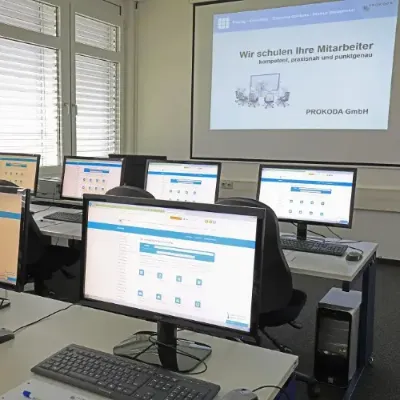
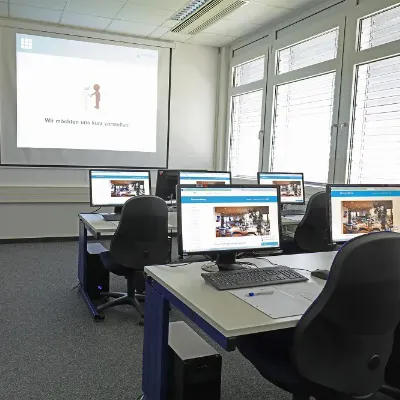
Your booking with us is transparent and flexible, without hidden costs. Our seminar rooms in Cologne not only offer pleasant air conditioning, but are also equipped with high-quality technology such as PCs, flat screens and projectors.

With the ITIL Version 5 Foundation, you begin your entry into modern Digital Product and Service Management according to ITIL. The Foundation training conveys all fundamental contents of ITIL Version 5, including the unified Digital Product & Service Lifecycle, value creation, governance, experience, and continual improvement. This establishes the professional basis for all advanced ITIL Version 5 certifications. The ITIL Version 5 Foundation training is offered with a date guarantee and follows the proven SERVIEW Workbook Principle®, which supports practice-oriented learning and enables the direct application of the content in everyday professional life.
The ITIL Version 5 Foundation is the official entry point into the ITIL Version 5 qualification scheme and is aimed at anyone wanting to build a structured understanding of modern Digital Product and Service Management. The training conveys a common language, core ITIL concepts, and a unified lifecycle for managing digital products and services.
In the ITIL Version 5 Foundation training, participants develop a solid foundational understanding of value creation, collaboration, governance, and continual improvement within the Service Value System. This provides a dependable basis for the successful practical application of ITIL.
The ITIL Version 5 Foundation also forms the starting point for all advanced qualifications within the ITIL Version 5 model. It serves as the foundation for the three learning paths—ITIL Practice Manager, ITIL Managing Professional, and ITIL Strategic Leader—each of which leads to a recognized professional designation. Those who successfully complete all three designations achieve ITIL Master, the highest qualification level within the ITIL Version 5 system.
The ITIL Version 5 Foundation training is suitable for beginners as well as for specialists and managers who want to pursue a clear, internationally recognized development path in IT Service Management and digital transformation.
Seminar Content
In the ITIL Version 5 Foundation training, you will acquire a solid and practical understanding of modern Digital Product and Service Management within two intensive training days. The training provides you with the central mindset, shared terminology, and core models of ITIL Version 5, creating the foundation for successful application in your professional environment.
Fundamentals of ITIL Version 5
You learn why ITIL Version 5 is a consistent further development of existing ITIL approaches and how the focus shifts from pure IT Service Management to integrated management of digital products and services. You develop a clear understanding of value creation, outcomes, benefits, risks, and costs.
The unified Digital Product & Service Lifecycle
A central element of the training is the ITIL Product and Service Lifecycle. You understand how digital products and services are managed holistically across all phases—from idea to live operation and continual improvement. You learn how organizations overcome silos and meaningfully integrate product and service management.
The ITIL Value System
The training presents the ITIL Value System as a central management model. You get to know its individual components—Guiding Principles, Governance, Value Chain, Practices, and Continual Improvement—and understand how these enable consistent, value-oriented management.
Guiding Principles & practical application
You explore the ITIL Guiding Principles in depth and learn how they support decisions, prioritization, and improvements in daily practice. The focus is on practice- and experience-driven application rather than theoretical rule knowledge.
Roles, collaboration, and organization
Another focus is on the clearly defined roles, responsibilities, and outcomes in ITIL Version 5. You understand how collaboration works across teams, departments, and organizations, and how value is co-created for customers and users.
Customer & Employee Experience
ITIL Version 5 places strong emphasis on Customer Experience and Employee Experience. You learn how experiences can be systematically designed, measured, and improved—and why they are key success factors for digital products and services.
AI-native and future-oriented alignment
You gain a basic understanding of how AI-supported and automated environments are considered in ITIL Version 5. The focus is not on technical details, but on guidance, decision-making capability, and responsible management in complex, dynamic environments.
Preparation for the certification exam
The training prepares you specifically for the ITIL Version 5 Foundation exam. You understand the exam-relevant content, terminology, and relationships and can classify and apply ITIL Version 5 confidently.
Target Audience
The ITIL Version 5 Foundation training is aimed at anyone who wants to build a solid understanding of modern Digital Product and Service Management or systematically expand their existing knowledge. It is ideal for beginners as well as experienced specialists and managers who want to use ITIL Version 5 as a common orientation framework.
It is particularly relevant for staff in IT, Service Management, Product Management, and digital business areas involved in the planning, development, delivery, or operation of digital products and services. Roles at the interface between IT and business also benefit from the shared language and clear models of ITIL Version 5.
The training is equally relevant for specialists and leaders responsible for governance, organization, processes, or teams, who want to understand how value creation, collaboration, and continual improvement succeed in an increasingly digital and AI-driven environment.
The ITIL Version 5 Foundation is suitable for:
- Beginners in IT Service Management and Digital Management
- Project, product, and service owners
- Managers, team leaders, and decision-makers
- Consultants and external service providers
- Employees in organizations transitioning to product- and service-oriented ways of working
The ITIL Version 5 Foundation training is therefore the ideal starting point for anyone who wants to understand digital products and services holistically, manage them effectively, and develop along the ITIL Version 5 qualification path.
Your Path After the ITIL Version 5 Foundation
The ITIL Version 5 Foundation is the first step in a clearly structured and internationally recognized qualification path in Digital Product and Service Management. After successfully completing the Foundation, several development paths open up, flexibly aligned with your professional goals, role, and responsibilities.
Entering the ITIL Version 5 qualification path
With ITIL Version 5 Foundation, you establish the binding basis for all advanced modules and designations. You acquire a shared language, a holistic understanding of value creation, and the core models on which all further ITIL Version 5 qualifications build.
Three specialization paths – one common goal
After the Foundation, you can choose your personal learning path:
ITIL Practice Manager
For those with operational responsibilities who want to apply ITIL practices in a hands-on manner, focusing on roles, stable workflows, and continual improvement.
ITIL Managing Professional
For specialists and managers who holistically manage products, services, experience, and transformation.
ITIL Strategic Leader
For decision-makers who want to connect digital strategy, governance, and transformation and use ITIL as a strategic framework.
A core element of all paths is the module ITIL Transformation, which must be taken only once and counts toward all designations.
The goal: ITIL Master
Those who successfully complete all three designations—Practice Manager, Managing Professional, and Strategic Leader—achieve ITIL Master, the highest qualification level in the ITIL Version 5 system. This designation stands for deep expertise, practical experience, and the ability to apply ITIL effectively in complex real-world organizations.
Your Perspective
The ITIL Version 5 Foundation training is not a one-way street but the beginning of a long-term development journey—from foundational understanding to strategic design of digital products and services. You decide how far you want to go and where to focus.
Requirements
No prior knowledge is required to participate in the ITIL Version 5 Foundation.
Exam Details
Duration: 60 minutes
Option 1 (Classroom only):
Paper-based exam
- Conducted at the end of the training in the classroom
- Traditional paper-and-pencil format
Option 2:
Online exam
- Taken via web browser (Web Based Exam Driver) at a date of your choice
- You receive a voucher valid for 12 months
- More details: https://www.peoplecert.org/ways-to-get-certified/web-based-exam-driver-guidelines
Questions: 40 multiple-choice questions
Additional information:
- Passing score: 26 points (65%)
- Maximum score: 40 points (100%)
- No aids permitted
Exam languages: German* or English
Note: German exams not yet available.
Exam institute: PeopleCert
Seminar Price
925.00 EUR
per person plus VAT
- Learner Package 419.00 EUR
per person plus VAT
Modern AI skills for everyday work – practical Microsoft 365 Copilot training
In this hands‑on one‑day workshop, participants gain a comprehensive and modern introduction to Microsoft 365 Copilot Chat, the AI‑powered assistant within the M365 ecosystem.
You will learn how Copilot supports you in Word, Outlook, Teams and other Microsoft 365 services to accelerate workflows, create content efficiently and prepare information faster.
A major focus is on effective prompting — the skill of giving clear, structured and purposeful instructions to achieve optimal Copilot results.
Participants learn how to use Copilot safely, productively and intelligently for research, writing, knowledge management, communication and project support.
This workshop provides concrete best practices, showcases real‑world use cases and equips attendees with the skills needed to apply AI effectively in modern Microsoft 365 environments.
Our experienced trainers will show you how to:
- understand how Microsoft 365 Copilot Chat works and where it provides value
- write effective, structured prompts for higher‑quality AI results
- use Copilot efficiently in Word, Outlook, Teams and other M365 apps
- apply Copilot for research, summarisation, knowledge organisation & content creation
- evaluate and refine Copilot output to ensure quality and reliability
- apply best practices for using AI safely in a business context
Your benefits at a glance
- fast, practical introduction to the AI capabilities of Microsoft 365 Copilot
- more efficient workflows through intelligent automation
- professional prompting strategies for better and more reliable results
- increased productivity in Word, Outlook, Teams & more
- practical tips, ready‑to‑use knowledge & real‑world examples
- confident, secure use of AI tools in daily business activities
Course Contents
Introduction to Microsoft 365 Copilot Chat
- overview of core Copilot Chat features
- support for daily communication, research & writing
- typical use cases in everyday work
Prompting Techniques as a Foundation
- structure of strong prompts: role, goal, context
- iterative prompting: refining, clarifying & improving
- common phrasing patterns for professional AI results
Working with Copilot Chat
- navigation, interface & functional logic
- using email, document & calendar context
- support for research, structuring & knowledge management
- limitations, risks & quality assurance
Use Cases & Best Practices
- intelligent search & information gathering
- summarising documents, emails & Teams conversations
- generating, revising & adapting text (tone, style, structure)
- analysing and transforming existing content
- support for project & task management
- simplifying business processes & accelerating repetitive workflows
- creating reports, evaluations & concepts
Copilot Across the Microsoft 365 Apps
- examples from Word, Excel, PowerPoint, Teams, Outlook
- where Copilot adds the most value
Target Audience
This workshop is ideal for:
- office, administration, assistant & organisational roles
- project managers, leaders & knowledge workers looking to use AI efficiently
- teams aiming to increase productivity with Microsoft 365 & Copilot
- individuals seeking a practical entry into AI in the workplace
- users who want to become more confident with AI‑powered tools
Suitable for both beginners and users with initial Copilot experience.
Prerequisites
- basic knowledge of Microsoft 365 (e.g., Outlook, Word, Teams)
- existing access to Microsoft 365 Copilot (if available in the organisation)
- interest in AI‑assisted productivity and modern work practices
Create professional diagrams, processes & visualizations
In this introductory training, you will learn how to use Microsoft Visio to create professional diagrams, flowcharts, organizational charts, and graphical visualizations. You will gain a practical understanding of the interface, the most important tools, and how shapes, stencils, and layers work together.
You will also learn how to structure drawings, format content, use connectors, and create templates for recurring diagram types.
Our experienced trainers will show you:
- how to confidently use Visio and customize the workspace
- how to create, edit, and precisely align drawings
- how to work with shapes, stencils, layers, and background pages
- how to structure diagrams clearly and apply professional formatting
- how to efficiently create organizational charts and flowcharts
- how to design your own shapes and templates
- what’s new across different Visio versions
Your benefits at a glance
- Efficient introduction to Visio – ideal for beginners
- Ability to create professional diagrams in a short time
- Clearly structured visual communication of processes & organizational structures
- Increased efficiency using layers, style templates & master shapes
- Faster creation of recurring diagram types
- Easy-to-understand introduction, independent of the Visio version used
Seminar Contents
Interface & Navigation
- Elements of the Visio application window
- Customizing the workspace
- Inserting & deleting drawing pages
Creating & Editing Simple Drawings
- Using lines, rectangles & ellipses
- Inserting AutoShapes
- Moving & copying objects
- Adjusting size & shape
- Using multi-selection
Working with Stencils & Shapes
- Opening & closing stencils
- Selecting shapes & searching via the Shape Explorer
- Placing & positioning shapes
- Changing size & rotation
- Aligning, snapping & gluing shapes
- Connecting shapes
Inserting & Editing Text
- Adding text to shapes
- Creating text shapes
- Character & paragraph formatting
Formatting & Editing Shapes
- Fill colors & shadows
- Formatting lines
- Applying shape operations
Creating & Managing Layers
- Creating layers
- Assigning shapes to layers
- Managing layers
Backgrounds & Templates
- Inserting background pages
- Using background shapes
- Setting up headers & footers
- Assigning backgrounds
Creating Your Own Stencils & Shapes
- Creating new stencils
- Creating & editing master shapes
Organizational Charts & Flowcharts
- Inserting, expanding & formatting org charts
- Creating flowcharts
- Using dedicated flowchart shapes
Version Notes Depending on Needs
- Differences & updates across various Visio versions (based on participant requirements)
Target Audience
- Users who are new to Visio or want to strengthen their fundamentals
- Anyone creating diagrams, processes, or visual representations
- Staff in organization, IT, administration, project & process management
Prerequisites
- Basic knowledge of the Windows interface
- Basic skills in at least one Microsoft Office application
The perfect start to TOGAF® 10 – Understand, develop & apply enterprise architecture with confidence
The TOGAF® Enterprise Architecture Foundation marks the beginning of your journey into modern enterprise architecture. This compact combined course (Foundation + Practitioner) provides you with all essential concepts, methods and techniques from the TOGAF® Standard, 10th Edition.
In the Foundation module, you learn the central terminology, concepts and structures of TOGAF®, including the core element – the Architecture Development Method (ADM). This practical knowledge enables you to drive efficiency, agility, structure and value creation within your organisation.
In the subsequent Practitioner module (included in this combined training), you deepen your expertise with advanced techniques such as stakeholder management, change management, architecture governance, solution design and scenario analysis — exactly the skills required for demanding EA roles.
After completing both parts, you will take the official certification exams via Pearson VUE at a time of your choice and earn the title TOGAF® Enterprise Architecture Practitioner.
Our experienced trainers will show you how to:
- understand the structure and content of the TOGAF® Standard (10th Edition)
- apply fundamental architecture concepts and terminology with confidence
- work with the Architecture Development Method (ADM)
- plan, execute and document architecture work in a structured manner
- identify & involve stakeholders effectively in the architecture process
- apply change‑management techniques and develop architecture vision
- understand how Foundation & Practitioner complement each other for strong EA capability
- prepare efficiently for both official certification exams
Your benefits at a glance
- two TOGAF® certifications in one compact training
- ideal for architects, IT managers, project leads & decision‑makers
- practical learning instead of pure theory
- accredited training (delivered by SERVIEW on behalf of The Open Group)
- immediate applicability in real enterprise‑architecture initiatives
- exam vouchers included
Course Contents
TOGAF® Foundation (Part 1)
- key architectural concepts & terminology
- structure of the TOGAF® Standard (10th Edition)
- the Architecture Development Method (ADM)
- ADM phases, objectives & deliverables
- architecture repository & architecture content
- architecture domains: Business, Data, Application & Technology Architecture
- basics of EA governance & compliance
TOGAF® Practitioner (Part 2) (included in this compact course)
- stakeholder management in complex organisations
- implementing the architecture vision
- modelling techniques & solution architecture
- analysing & designing complex enterprise requirements
- change‑management and governance techniques
- applying TOGAF® methods in real‑world EA practice
- scenario‑based learning & exam preparation
Exam Preparation
- focus areas for Foundation & Practitioner
- typical exam questions & best‑practice approaches
- practice questions & knowledge consolidation
Target Audience
This training is ideal for:
- Enterprise & Solution Architects
- IT managers, CIO/CTO teams
- project & programme managers
- business analysts & process architects
- architecture & transformation consultants
- leaders in EA, IT or strategic roles
Prerequisites
- no prior knowledge required
Exam Details (The Open Group / Pearson VUE)
Part 1 – TOGAF® Foundation
- Duration: 60 minutes
- Format: 40 multiple‑choice questions
- Pass mark: 24 points (60%)
- Open Book: No
Part 2 – TOGAF® Practitioner
- Duration: 90 minutes
- Format: 8 scenario‑based multiple‑choice questions
- Pass mark: 24 points (60%)
- Open Book: Yes (official TOGAF® guidance)
General
- Exam mode: online via Pearson VUE OnVUE (supervised)
- Exam language: English
Course Price
- Training (Foundation + Practitioner): €3,850.00 p.p. excl. VAT
- Learner Package: €150.00 p.p. excl. VAT
- Exam voucher: included
Legal Notice
TOGAF® Enterprise Architecture Training delivered by SERVIEW GmbH is accredited by The Open Group.
PROKODA GmbH markets this training on behalf of SERVIEW GmbH.
TOGAF® is a registered trademark of The Open Group.
All rights reserved.
Understand, apply & anchor scaled agility in large organisations
In this Leading SAFe® training, you will learn the mindset, principles and structure behind the globally established Scaled Agile Framework (SAFe®).
You will understand why SAFe is particularly valuable for large organisations, which roles and events it includes, and how the framework aligns agile teams, programs and entire organisations.
After the training, you will be able to evaluate the functionality, opportunities and application scenarios of SAFe professionally — and drive strong impulses for agile transformation within your organisation.
Our experienced trainers will show you how to:
- understand the SAFe® mindset and Lean‑Agile principles
- optimise value streams using SAFe in large organisations
- work with SAFe roles, responsibilities and process flows
- plan, launch and lead Agile Release Trains (ARTs)
- prepare, run and follow up on PI Planning effectively
- foster Business Agility at scale
- prepare efficiently for the SAFe® 6.0 Agilist certification
Your benefits at a glance
- solid introduction to the Scaled Agile Framework (SAFe®)
- clear understanding of enterprise‑level agile transformation
- hands‑on preparation for the SAFe® 6.0 Agilist certification
- access to the SAFe Community Platform including learning materials
- internationally recognised certification
Course Contents
Introduction to SAFe® & Lean‑Agile Leadership
- values & principles of the Lean‑Agile mindset
- benefits of scaled agility for large enterprises
SAFe® Core Concepts & Framework Overview
- overview of SAFe levels & value streams
- SAFe roles & responsibilities
- business agility & organisational alignment
Understanding Agile Release Trains (ARTs)
- structure & workflow of ARTs
- cross‑team collaboration & scaling techniques
PI Planning & Execution
- preparation, facilitation & follow‑up
- stakeholder management & decision‑making
SAFe® Program & Execution
- objectives, backlogs, iterations & synchronisation
- flow optimisation & incremental delivery
SAFe® Transformation & Implementation Strategy
- steps, roadmaps & success factors
- organisational culture, leadership & change dynamics
Exam Preparation
- sample questions & common challenges
- additional resources via the SAFe Community Platform
Exam Details (Scaled Agile Inc.)
- Duration: 90 minutes (web‑based)
- Questions: 45
- Eligibility: Attendance of both training days required
- Exam window: 30 days after registration
- Mandatory:
- completion of the practice exam
- registration on the SAFe Community Platform
- Certificate: SAFe® 6.0 Agilist (SA)
- Languages: German or English
- Retake policy:
- 2nd attempt immediately possible (50 USD)
- 3rd attempt after 10 days
- 4th attempt after 30 days
- Certification renewal: annually, 100 USD
Target Audience
Ideal for:
- (project) managers, leaders & decision‑makers
- Scrum Masters, Product Owners, Agile Coaches
- team & department leads
- change managers & transformation leaders
- anyone aiming to implement or understand SAFe in their organisation
Prerequisites
- no formal prerequisites
- Scrum experience recommended
Seminar Price
- Training: €1,295.00 p.p. excl. VAT
- Exam fee: €199.00 p.p. excl. VAT
- Education Package: €69.00 p.p. excl. VAT
- Certified TIA-942 Internal Auditor - CTIA® (exam included) - Course Language: English
- Certified Data Centre Migration Specialist - CDMS® (exam included) - Course Language: English
- Certified Network Cabling Design Professional - CNCDP® (exam included) - Course Language: English
- Certified TIA-942 Design Consultant - CTDC® (exam included) - Course Language: English
Data Centre training for many companies:
These customers already trust us
Maximize the security and efficiency of your data center with our certified Data Centre Training. Our practical training courses provide essential know-how on the design, operation and compliance of data centers. Through continuous training, you reduce downtime, minimize sources of error and meet international standards. Benefit from recognised certifications with the globally accredited training courses from PROKODA GmbH & EPI.