In our seminar rooms or comfortably from home!
We support you as a consultant, organizer, and implementation partner for IT-qualifications, IT-projects, and Data Centre training
News: EPI joins the TÜV NORD GROUP
This marks a significant milestone in EPI’s 38-year journey, strengthening its position to serve customers while continuing to operate independently under the EPI brand
Our bestseller workshops

 PDF
PDF


Seminartermine nach Kategorien
You can rent our seminar rooms!
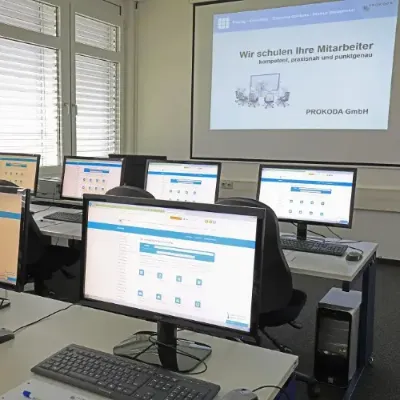
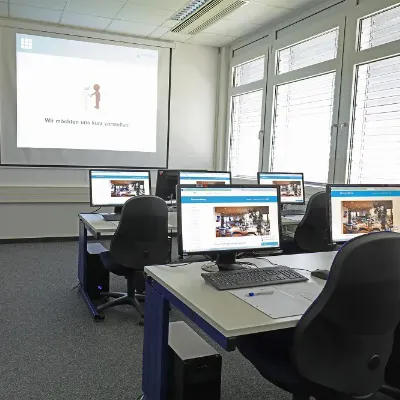
Your booking with us is transparent and flexible, without hidden costs. Our seminar rooms in Cologne not only offer pleasant air conditioning, but are also equipped with high-quality technology such as PCs, flat screens and projectors.

PDF/UA-Compliant Documents with Acrobat Pro, Tungsten, Editor Advanced, or Foxit Editor Pro
Accessible PDF documents are no longer just a matter of usability—they are a legal requirement, especially for public institutions and increasingly for businesses. Standards such as PDF/UA, BITV, and requirements from the Accessibility Strengthening Act (BFSG) make technically correct implementation essential.
In this practical seminar, you will learn how to check, correct, and publish accessible PDF documents. You will work with the PDF Accessibility Checker (PAC) as well as common PDF editors such as Adobe Acrobat Pro, Tungsten (formerly Kofax), Editor Advanced, or Foxit Editor Pro and systematically fix typical accessibility issues.
Our experienced trainers will show you:
- The technical and legal requirements for accessible PDFs
- How to correctly check PDFs using the PAC Checker
- How to adjust tags, structures, and content according to standards
- How to identify and fix common errors
Your Benefits at a Glance
- Practical training for creating accessible PDF documents
- Confident handling of PDF/UA requirements
- Working with common checking and editing tools
- Clear step-by-step approach to error correction
- Legally compliant publication of accessible PDFs
- Participation available on-site or live online
Seminar Contents
Checking PDF Documents
- Introduction to accessible PDF and PDF/UA
- Checking with the PAC Checker (PDF Accessibility Checker)
- Interpreting check results
Structure & Navigation
- Order navigation panel
- Tags navigation panel
- Content and navigation panel
Working with Tags
- Adding and editing tags
- Adjusting tag role mapping
- Correctly marking artifacts
- Fixing display errors in PDFs
Creating Accessible Content
- Adding alternative text for graphics
- Correctly tagging tables
- Tagging tables with merged cells
- Correctly placing footnote tags
- Correcting link tags
Navigation & Orientation
- Defining navigation elements
- Automatically generating bookmarks from tag structure
- Adding and checking hyperlinks
Language & Security
- Defining language changes
- Setting accessible security options
Fixing Common Errors
- Correcting common error messages
- Fixing typical form errors
Target Audience
This seminar is designed for:
- Employees who need to make finished PDF documents accessible
- Staff from administration, authorities, companies, and organizations
- Professionals in editorial, communication, IT, or document management
- Anyone who must publish PDFs in compliance with PDF/UA standards
Prerequisites
- No special prior knowledge required
- Basic experience with PDF documents is helpful
Microsoft Access Expertise – Queries, Forms, Reports, and Macros
In this seminar, participants will learn advanced techniques for working with Microsoft Access. The focus is on creating and using action queries, designing complex forms and reports, and using macros to automate database processes. Practical exercises demonstrate how to manage, analyze, and present data efficiently.
Our experienced trainers will show you:
- How to use action queries to edit data effectively
- How to design advanced forms for data entry, selection, and analysis
- How to create structured reports with totals and running sums
- How to automate processes with macros
Your Benefits at a Glance
- Deep dive into advanced Access functions
- Practical exercises for real-world database scenarios
- Efficient workflows through automation with macros
- Professional techniques for forms, reports, and queries
- Participation available on-site or live online
Seminar Contents
Action Queries – Targeted Data Editing
- Adding, updating, or deleting records
- Working with select, append, and delete queries
Forms – Data Entry, Selection, and Analysis
- Creating and customizing simple data entry forms
- Designing complex forms for selection, analysis, and calculations
- Setting up a start form as a control center for the database
Reports – Structured Data Presentation
- Adjusting and adding groupings
- Creating subtotals and grand totals
- Calculating running sums
Macros – Automating Processes
- Introduction to the macro catalog and its applications
- Creating simple macros and entering action arguments
- Setting conditions for macro execution
Target Audience
This seminar is designed for:
- Users who want to make their databases more efficient with advanced form and report functions
- Anyone who wants to automate processes and optimize their work with Access using macros
Prerequisites
- Participation in the Access introduction seminar or equivalent knowledge
- Practical experience with your own databases
Microsoft Access Know-How – Understand, Create, and Manage Databases
In this seminar, participants will learn the fundamental functions and capabilities of Microsoft Access. The goal is to maintain and adapt existing databases and efficiently create new ones. The key differences between Access and Excel will be explained to understand when Access is the better choice.
Our experienced trainers will show you:
- How to create and manage Access databases
- How to work with tables, queries, forms, and reports
- How to structure and analyze data effectively
- How to use Access efficiently in everyday work
Your Benefits at a Glance
- Clear introduction to Microsoft Access with no prior experience required
- Practical exercises with real-world examples
- Confident handling of tables, queries, forms, and reports
- Professional foundations for structured data management
- Participation available on-site or live online
Seminar Contents
Understanding Access – Tables and Databases Compared
- Why use Access when Excel exists?
- Differences between Excel and Access tables
- Basics: What are databases and how do they work?
Tables – Structured Data Entry and Management
- Understanding fields, records, data types, and properties
- Building database structures
- Creating key fields and defining relationships
Queries – Filtering, Analyzing, and Calculating Data
- Understanding and applying expression criteria
- Analyzing data from multiple tables
- Recognizing and avoiding common errors and error messages
- Performing calculations directly in Access instead of Excel
Formulas, Functions, and Calculations in Access
- Using formulas and functions in queries
- Creating totals and calculated fields
Forms – Efficient Data Entry and Retrieval
- Designing simple forms for data entry
- Creating complex forms for targeted analysis
Reports – Presenting Results Clearly
- Designing and customizing report layouts
- Printing reports and preparing them for presentations
Tips & Tricks
- Practical advice for efficient use of Access in daily work
- Best practices for structured data management
Target Audience
This seminar is designed for:
- Users who want to manage and analyze data in a structured way
- Individuals seeking an introduction to Microsoft Access or wanting to better understand and use existing databases
Prerequisites
- Basic knowledge of Microsoft Office
- Good Excel skills are an advantage
Advanced techniques for data entry, formatting, analysis, and automation with Excel
In this two-day workshop, participants learn advanced techniques for entering, formatting, and analyzing Excel data. The course shows how to effectively protect data, work with logical and lookup functions, and perform complex analyses using pivot tables.
In addition, participants are introduced to macros to automate recurring tasks and make workflows more efficient.
Your benefits at a glance
- Advanced functions for data analysis, logic, and lookups
- Create, customize, and analyze pivot tables
- Protect data and worksheets effectively
- Record and use macros for automation
- Available as in-person or online training
Course Content
Editing and formatting tables
- Apply conditional formatting
- Create drop-down lists
- Define and use named ranges
Protecting data
- Protect workbooks
- Protect worksheets
- Protect cells and ranges
Data analysis with functions
- SUMIF, SUMIFS
- COUNTIF, COUNTIFS
- IFERROR
Logical and array functions
- Create simple IF formulas
- Combine functions (AND, OR, NOT, etc.)
- Use VLOOKUP
Data analysis with pivot tables
- Create pivot tables from Excel data
- Customize rows and columns
- Use table layout and options
- Create PivotChart reports
Recording macros
- Basics: What are macros?
- Record and save simple macros
- Assign macros to buttons
Prerequisites
- Participation in an Excel basics course or equivalent solid knowledge
- Basic experience working with Excel spreadsheets
Target Audience
- Users with good basic Excel skills who want to deepen and expand them
- People who analyze, visualize, and automate data
- Professionals in controlling, administration, project management, or commercial/business fields
Expertise in Microsoft Access VBA – Automate and Control Databases Efficiently
In this training, participants will learn how to use the VBA (Visual Basic for Applications) programming language to create custom automations and extensions in Microsoft Access. You will discover how VBA simplifies daily tasks, speeds up processes, and makes Access databases more flexible and intelligent. Step by step, you will learn the fundamentals of programming—from simple procedures to data access and error handling.
Our experienced trainers will show you:
- How to use VBA to automate processes in Access
- How to create procedures, functions, and event-driven logic
- How to control data efficiently with DAO and ADO
- How to debug and handle errors professionally
Your Benefits at a Glance
- Clear introduction to VBA programming for Access
- Practical exercises with real-world examples
- Efficient workflows through automation
- Professional techniques for database control and customization
- Participation available on-site or live online
Seminar Contents
Introduction to VBA – Programming Basics in Access
- Understanding the differences between macros and modules
- Structure and components of the VBA development environment
- Importance and use of the Object Catalog
Programming Fundamentals – Procedures, Variables, and Functions
- Creating event procedures and functions
- Developing, testing, and optimizing procedures
- Declaring and using variables effectively
- Understanding variable scope
- Using constants
- Creating and applying custom functions
Control Structures and Loops – Logic and Flow Control in VBA
- Conditional statements with If…Then…Else and Select Case
- Loops with For…Next
- Iterations with Do Loop While and Do Loop Until
Data Access with VBA – Efficient Data Handling
- Working with data access objects (DAO and ADO)
- Searching, editing, and updating records
- Dynamic data control in forms and reports
Debugging and Error Handling – Clean Programming
- Basics of error handling in VBA
- Setting breakpoints and monitoring code
- Checking and observing variables
- Using the Immediate Window for error analysis
Target Audience
This seminar is designed for:
- Users with solid Access knowledge who want to automate databases and create custom VBA solutions
- Anyone who wants to make Access processes more efficient and learn VBA programming in depth
Prerequisites
- Good knowledge and practical experience with Access databases
Data Centre training for many companies:
These customers already trust us
Maximize the security and efficiency of your data center with our certified Data Centre Training. Our practical training courses provide essential know-how on the design, operation and compliance of data centers. Through continuous training, you reduce downtime, minimize sources of error and meet international standards. Benefit from recognised certifications with the globally accredited training courses from PROKODA GmbH & EPI.