In our seminar rooms or comfortably from home!
We support you as a consultant, organizer, and implementation partner for IT-qualifications, IT-projects, and Data Centre training
News: EPI joins the TÜV NORD GROUP
This marks a significant milestone in EPI’s 38-year journey, strengthening its position to serve customers while continuing to operate independently under the EPI brand
Our bestseller workshops

 PDF
PDF


Seminartermine nach Kategorien
You can rent our seminar rooms!
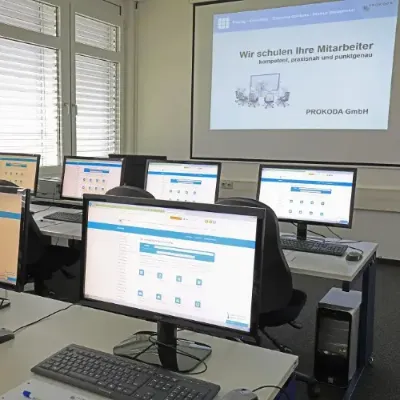
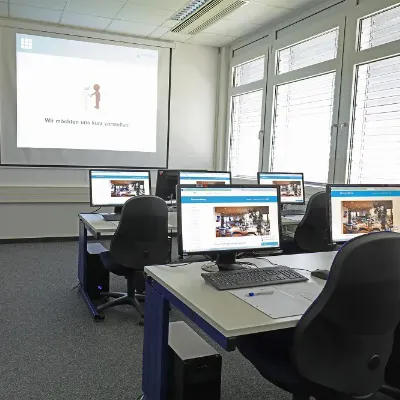
Your booking with us is transparent and flexible, without hidden costs. Our seminar rooms in Cologne not only offer pleasant air conditioning, but are also equipped with high-quality technology such as PCs, flat screens and projectors.

Foundations of Java Programming for Beginners and Career Changers
In this 2‑day training, participants acquire the fundamentals of Java programming. By the end of the seminar, you will understand the concept of object‑oriented programming, be able to develop simple applications independently, and use the development environment efficiently. Ideal for beginners, career changers, or software developers with little Java experience.
Your Benefits at a Glance
- Confident introduction to Java and the development environment
- Understanding of object‑oriented programming
- Mastering language syntax, control structures, and methods
- Error handling and working with exceptions
- Fundamentals of collections, arrays, and strings
- First practical mini‑projects to apply what you’ve learned
Seminar Contents
Basics of Java and the Development Environment
- Introduction: What is Java? Platform independence
- IDEs (e.g., IntelliJ), JDK/JVM, project structure
Language Syntax & Control Structures
- Data types, operators, conditions, loops
- Methods, parameter passing, return values
Object-Oriented Programming
- Classes, objects, attributes, methods
- Constructors, this, static, final
- Introduction to inheritance and polymorphism
Error Handling & Exceptions
- try/catch, throw, finally
- Understanding the exception hierarchy
Collections & Data Structures
- Arrays, lists (ArrayList)
- Iterating through collections
Strings & Input/Output
- String manipulation, StringBuilder
- Reading user input
Design Patterns
- Selected design patterns (e.g., Singleton, Factory, Strategy)
- Understanding and applying Has‑A and Is‑A relationships
The Object Class and Core Methods
- Importance of the Object class as the superclass of all Java classes
- Overriding toString(), equals(), and hashCode()
- Difference between reference comparison (==) and logical comparison (equals)
- Importance of hashCode() in hash‑based collections (HashMap, HashSet)
- Best practices for consistent overriding of equals() and hashCode()
Project Work & Exercises
- Small, practical mini‑projects
- Final project to apply the acquired knowledge
Prerequisites
No specific Java knowledge required Basic PC skills and experience with a Windows application are helpful
Target Group
- Beginners and career changers entering software development
- Software developers with little or no Java experience
- Anyone who wants to learn the fundamentals of object‑oriented programming in a practical way
Impress Your Audience with Perfectly Visualized Excel Data
In this hands-on PowerPoint workshop focused on Excel data integration, you will learn how to professionally import, design, and present numbers, tables, and charts from Microsoft Excel in PowerPoint. Whether for management meetings, project presentations, or annual reports—after this training, you will know how to present complex data clearly, visually appealing, and dynamically.
Our experienced trainers guide you step by step through embedding, linking, and inserting Excel tables and charts to make your presentations engaging and professional. You will also learn how to creatively animate charts and tables and enhance their informational value through professional design.
This seminar combines Excel expertise with PowerPoint design skills—ideal for anyone who regularly works with numbers and reports and wants to create compelling presentations.
Your Benefits at a Glance
- Practice-oriented Microsoft seminar focusing on Excel & PowerPoint
- Step-by-step instructions and numerous real-world examples
- Direct transfer to your daily work with immediately applicable techniques
- Tips for creative visualization and animated representations
- Hybrid workshop: participate on-site or live online
Seminar Contents
Importing Excel Data into PowerPoint
- Insert Excel tables as images or objects in PowerPoint
- Edit, format, and update inserted Excel tables
- Embed or link Excel files
- Create and manage links between Excel and PowerPoint
- Import charts from Excel and choose formatting options
- Best practices for transferring tables and charts
Editing and Designing Tables
- Creative ideas for table visualization in PowerPoint
- Use custom border formats and designs
- Create decision tables with symbols and icons
- Highlight table elements with targeted animations
Presenting Charts Effectively
- Overview of chart types in PowerPoint
- Format charts clearly and expressively
- Save and reuse custom chart templates
- Present charts dynamically with animations
- Smart ideas for visualizing numbers and trends
During the Presentation
- Launch Excel during a presentation and display the desired worksheet directly
- Create interactive presentations with updatable Excel data
Target Group
This seminar is designed for anyone who regularly presents numbers, tables, or analyses in PowerPoint and wants to transfer them professionally from Excel. Especially suitable for:
- Employees in controlling, marketing, sales, project management, or reporting
- Professionals and managers who want to visualize reports and results convincingly
- Users who want to combine their Excel and PowerPoint skills effectively
Prerequisites
Participants should have solid basic knowledge of Microsoft PowerPoint. Basic Excel skills are helpful for effectively importing and adjusting tables and charts.
Efficient Work Organization with Outlook
In this seminar, participants learn advanced techniques for managing emails, scheduling appointments, and organizing teamwork in Outlook. The focus is on using Outlook’s features efficiently to optimize workflows, save time, and improve team collaboration.
Your Benefits
- Manage, categorize, and automate email processing quickly and efficiently
- Organize appointments and calendars effectively, including recurring events and customized views
- Simplify teamwork through group calendars and targeted access permissions
- Delegate tasks and track progress reliably
Course Contents
Email Management
- Process and manage emails efficiently
- Group and categorize emails
- Set up automatic replies and rules
Time Management with Outlook
- Create, edit, and organize appointments
- Create and customize recurring appointments
- Configure and apply targeted calendar views
Efficient Team Collaboration
- Create and manage group calendars
- Configure access permissions for calendars and mailboxes
- Delegate and assign tasks
Prerequisites
Participation in the introductory seminar or equivalent knowledge
Target Group
Users who want to actively use Outlook for personal work organization and team collaboration
Working Efficiently with Outlook
In this training, participants will get to know the individual Outlook modules—Email, Contacts, Calendar, Tasks, and Notes—and learn how to customize the user interface. The focus is on sending, receiving, and organizing emails, as well as using the calendar and contacts efficiently.
Your Benefits
- Create, send, and manage emails securely
- Create, maintain, and group contacts effectively
- Plan, adjust, and track appointments and meetings
- Create, delegate, and manage tasks efficiently
- Customize Outlook to optimize workflows
Course Contents
Fundamentals of Program Operation
- Starting Outlook locally or online
- Using and customizing ribbons and tabs
- Customizing the workspace, including the Quick Access Toolbar
- Adjusting the application window and navigation pane
- Using the reading pane and additional view options
Writing and Managing Emails
- Creating, addressing, and sending emails
- Using email options and file attachments
- Receiving, replying, forwarding, and categorizing emails
- Using Quick Steps, signatures, and the out-of-office assistant
- Searching and tracking emails
Address Book and Contacts
- Creating, saving, and using contacts
- Creating and managing contact groups
Calendar
- Adjusting calendar views
- Creating, editing, and deleting appointments
- Creating, sending, accepting, or declining meeting requests
Tasks
- Creating, tracking, and delegating tasks
Prerequisites
Basic Windows knowledge and experience with any Windows application
Target Group
Users who want to learn Outlook fundamentals or systematically expand their existing knowledge
Artificial Intelligence for Images, Text, and Layout
In this hands‑on seminar, participants learn how artificial intelligence can support creative work in media design. From idea generation to creating images, graphics, and text, all the way to post‑production, we demonstrate how AI tools such as Photoshop AI, Midjourney, or ChatGPT can be used effectively. Through numerous exercises and real‑world examples, you will discover how AI accelerates media production, optimizes workflows, and opens up new creative possibilities.
Your Benefits at a Glance
- Support creative processes efficiently with AI
- Use AI tools in practice: image generation, layouts, text & content
- Learn new methods for modern media production
- Hands‑on exercises with real examples
- Optimize and automate design workflows
- Understand legal and ethical aspects of AI in media design
Seminar Content
Introduction to AI & Media Design
- Basics: What is AI?
- Application areas in the creative industry
- Trends and future perspectives
AI Tools in Practice
- Image generation with Midjourney and Adobe Firefly
- Creating graphics with AI in Adobe Illustrator
- Text and content creation with ChatGPT
Creative Workflow with AI
- AI as an idea generator for concepts and projects
- Efficient creation of media content
- Integrating AI into existing design processes
- Practical exercises: implementing an AI‑supported media project
Legal & Ethical Aspects
- Copyright considerations
- Handling AI‑generated content
Requirements
No special prior knowledge required.
Target Audience
- Designers, graphic artists, media designers
- Marketing and content professionals
- Anyone who wants to make creative processes more efficient and use AI in a practical way
Data Centre training for many companies:
These customers already trust us
Maximize the security and efficiency of your data center with our certified Data Centre Training. Our practical training courses provide essential know-how on the design, operation and compliance of data centers. Through continuous training, you reduce downtime, minimize sources of error and meet international standards. Benefit from recognised certifications with the globally accredited training courses from PROKODA GmbH & EPI.