In our seminar rooms or comfortably from home!
We support you as a consultant, organizer, and implementation partner for IT-qualifications, IT-projects, and Data Centre training
News: EPI joins the TÜV NORD GROUP
This marks a significant milestone in EPI’s 38-year journey, strengthening its position to serve customers while continuing to operate independently under the EPI brand
Our bestseller workshops

 PDF
PDF


Seminartermine nach Kategorien
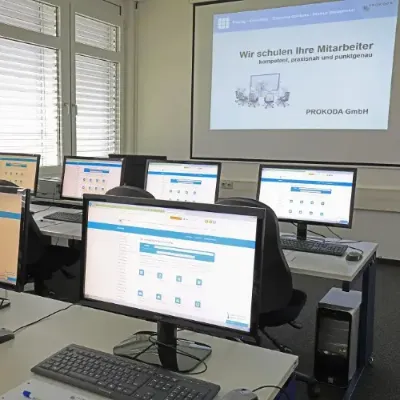
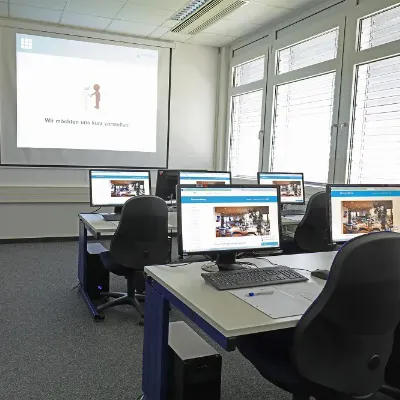
You can rent our seminar rooms!
Your booking with us is transparent and flexible, without hidden costs. Our seminar rooms in Cologne not only offer pleasant air conditioning, but are also equipped with high-quality technology such as PCs, flat screens and projectors.

Quickly and securely gather feedback, team decisions, and employee satisfaction
With Microsoft Forms, you can efficiently and GDPR‑compliantly capture sentiments from across your organization – ideal for managers, team leads, and department heads.
You will learn how to create suitable forms, design them visually, and use them strategically to measure employee satisfaction, support team decision-making, or collect feedback after meetings and projects.
We’ll show you how to embed Forms into emails, Teams, and SharePoint; how to analyze and export results; and how to interpret trends. Finally, we clarify questions about data protection, transparency, and responsible use.
Our experienced trainers will show you:
- how to choose the right form type (survey, quiz, feedback)
- which question types are best suited for different purposes
- how to design forms visually, structure them, and align them with your corporate design
- how sharing options work (internal, external, anonymous)
- how to meaningfully integrate Forms into M365 tools like Outlook, Teams, and SharePoint
- how to interpret results and derive recommendations for action
- how to ensure compliance with data protection, transparency, and responsibilities
Your Benefits at a Glance
- Quickly and efficiently capture employee sentiment
- Targeted feedback loops after projects or meetings
- Better decision-making through clear and meaningful data
- Seamless integration into the Microsoft 365 ecosystem
- Clear evaluations with export options to Excel or Power BI
- Confidence in meeting data protection and transparency requirements
Seminar Content
Use Cases for Managers
- Measuring employee satisfaction
- Supporting team decisions
- Gathering feedback after meetings or projects
Form Types & Question Formats
- Form types: survey, quiz, feedback
- Question types: multiple choice, rating, text, date
- Use cases and best practices
Design & Structure
- Corporate design customization
- Adding images
- Structuring sections
Sharing & Publishing
- Internal, external, and anonymous sharing
- Security & transparency in communication
- Participation tracking (optional)
Integration with Microsoft 365
- Embedding in emails
- Integration into Teams
- Use within SharePoint
Evaluation & Analysis
- Viewing results
- Export to Excel or Power BI
- Interpreting trends, sentiment, and recommendations
Data Protection & Compliance
- GDPR‑compliant usage
- Transparency rules
- Responsibilities & secure usage
Target Audience
- Managers
- Team leaders
- Department heads
- Anyone using Forms for internal communication, feedback, or decision-making
Prerequisites
- None
Digitize multi‑stage approvals, save time, and simplify processes
Approval workflows are part of everyday work in many organizations – often involving high manual effort, long waiting times, and unclear processes. With Microsoft Power Automate, you can create automated approval flows that provide transparency, save time, and reduce errors.
In this seminar, you will learn how to efficiently set up approvals with one or multiple approvers and fully automate complex approval procedures.
Our experienced trainers will show you:
- how to set up structured approval processes
- how decisions are documented automatically
- how to use variables, branches, and logic in flows
- how Outlook events are created automatically after approval
- how to integrate buttons in lists or libraries
- how to implement multi‑stage approvals (multi‑level flows)
- how to manage permissions and share flows with others
Your Benefits at a Glance
- Standardization and automation of approval processes
- Less manual effort and shorter processing times
- Clear documentation of all decisions
- Integration with SharePoint, Outlook, and other Office 365 services
- Reliable, transparent, and scalable approval workflows
- Practice‑oriented exercises for immediate application in daily work
Seminar Contents
Basics of Approval Flows
- Structure of an approval process
- Requesting approvals from responsible persons
- Documenting approval results in columns
Variables, Logic & Control
- Working with variables
- Using conditions and branching
- Applying logic to control processes
Integration in Microsoft 365
- Automatically creating Outlook events after approval
- Adding buttons to lists and document libraries
(to trigger a flow) - Power Automate connectors in Office 365
Complex Approvals
- Creating a multi‑level approval flow
- Implementing nested approval processes
- Best practices for stable workflows
Flow Management
- Publishing an approval flow
- Flow permissions and sharing with users
- Editing, optimizing, and deleting flows
Target Group
- Employees who want to digitize manual approval processes
- Individuals looking to automate, standardize, and accelerate workflows
- Teams handling numerous approval processes
Prerequisites
- Basic knowledge of Power Automate and SharePoint
(helpful but not required)
Save time, optimize processes, and automatically handle recurring tasks
With Microsoft Power Automate, you can create custom, cross‑platform workflows that automate time‑consuming processes and reduce tedious routine tasks. This streamlines your working day and allows you to focus on what really matters.
True to the Power Automate motto: Automate the rest.
Our experienced trainers will show you:
• how the Power Automate interface is structured
• how to create your first flow step by step
• which types of flows exist and what they are used for
• how to include conditions, branches, and logic
• how to use Office 365 interfaces and connectors
• how to publish, edit, and manage flows
Your Benefits at a Glance
• Automate recurring tasks and processes
• More efficiency and fewer manual errors
• Easily create workflows – without any programming knowledge
• Integration with Microsoft 365, Teams, SharePoint, and many other systems
• Practice‑oriented exercises for direct transfer into everyday work
• More time for value‑adding activities
Seminar Contents
User Interface & Getting Started with Power Automate
• Introduction to the Power Automate interface
• Navigation, structure, and basic functions
• Creating your first flow using a template
Flow Types & Templates
• Overview of available flow templates
• Differences between the various types of flows
• Use cases and best practices
Creating Your Own Flows
• Creating a flow without a template
• Adding steps, configuring triggers
• Editing, adjusting, and optimizing flows
Logic & Control
• Defining conditions
• Creating branches
• Flow control and error handling
Connectors & Interfaces
• Standard connectors in Power Automate
• Office 365 interfaces
• Data connections and integration possibilities
Publishing & Managing Flows
• Publishing a flow
• Sharing workflows
• Versioning and updates
• Deleting and organizing flows
Target Group
• Microsoft 365 users
• Individuals without technical or programming knowledge
• Employees who want to digitize processes or automate routine tasks
• Teams aiming to increase efficiency
Prerequisites
• Good knowledge of Microsoft 365
• No programming experience required
Deepen your Power BI knowledge: Learn advanced Power Query techniques, complex DAX functions, professional report design, and row-level security. This workshop provides practical training on how to efficiently create, manage, and share dashboards and reports with other users.
Our experienced trainers will show you:
- how to design and optimize complex data models while avoiding performance issues
- how to apply advanced Power Query techniques to efficiently prepare large or complex data sources
- how to develop sophisticated DAX calculations – including time intelligence, relationship handling, and dynamic measures
- how to build professional report structures, navigation flows, and interactive features (drillthrough, tooltips, bookmarks)
- how to implement security and governance – from Row‑Level Security to publishing and managing content in the Power BI Service
Your benefits at a glance
- 2-day seminar with hands-on exercises
- In-depth knowledge of Power Query and DAX functions
- Professional report design, navigation, and security settings
- Using the Power BI Service for collaboration and sharing
- Hybrid participation possible
Seminar content
Power Query:
- Parameters, Last Refresh, integrating SharePoint files
- Combining files from folders, unpivoting tables
- Merging multiple sheets, joining tables
DAX functions:
- Calendar, CalendarAuto, Calculate, CalculateAll / RemoveFilter
- Time Intelligence: TotalYTD, DateAdd
- UseRelationship, SumX
Report design & navigation:
- Page buttons, drillthrough, tooltips, bookmarks
- Lookup table for axis sorting
Row-Level Security (RLS):
- Setting up roles in Power BI Desktop
- Applying filters to columns or users
- Assigning roles in the Power BI Service
Power BI Service:
- Configuring workspaces, Manage access
- Create a Workspace app
Prerequisites
- Basic knowledge of Power BI Desktop or participation in Power BI Fundamentals
- Experience with pivot tables in Excel is an advantage
Target Audience
- Users who want to create complex dashboards and reports
- Professionals who use advanced analysis features of Power BI
- Participants who want to visualize and share data professionally
Learn the fundamentals of Power BI Desktop, Power Query, and DAX functions. In this hands-on workshop, you will create interactive reports and dashboards, import data from Excel or other sources, and publish your results to the Power BI Service. By the end, you will be able to create a complete sample report on your own.
Our experienced trainers will show you:
- how to import and prepare data from various sources in a structured way
- how to build a clean data model with relationships, measures, and DAX formulas
- how to design meaningful visualizations, KPIs, and dashboards
- how to publish, share, and update reports efficiently
- how to avoid common pitfalls and apply Power BI best practices
Your benefits at a glance
- Practical 2-day seminar with hands-on exercises on your laptop
- Introduction to Power BI Desktop, Power Query, and DAX functions
- Creating dashboards, KPIs, and interactive reports
- Publishing reports in the Power BI Service
- Participation possible in person or online
Seminar content
- Overview & Big Picture: From Excel to Power BI
- Power BI Desktop: Navigation & Orientation
- Power Query: Importing and preparing data
- Creating data models & relationships
- Measures & calculated columns with DAX
- Visualization: Charts, KPIs, dashboards
- Power BI Service: Publishing reports
- Practical example: Adventure Works
Prerequisites
- Basic knowledge of Excel or data analysis is advantageous
- No specific Power BI prior knowledge required
Target group
- Power BI beginners
- Professionals in controlling, project management, and reporting
- Anyone who wants to make informed decisions based on data
Data Centre training for many companies:
These customers already trust us
Maximize the security and efficiency of your data center with our certified Data Centre Training. Our practical training courses provide essential know-how on the design, operation and compliance of data centers. Through continuous training, you reduce downtime, minimize sources of error and meet international standards. Benefit from recognised certifications with the globally accredited training courses from PROKODA GmbH & EPI.